Contact
Tbilisi 0144,
50/18 Ketevan Tsamebuli Ave/ Bochorma Str., 0144, Tbilisi
Tel/Fax: +995 32 2921667
E-mail: post@comcom.ge
Phone number
+995 32 2921667
ComCom Chairman: “These Regulations are in no Way Aimed at Restricting any Media Outlets. On the Contrary, they are Designed to Improve the Media Environment”

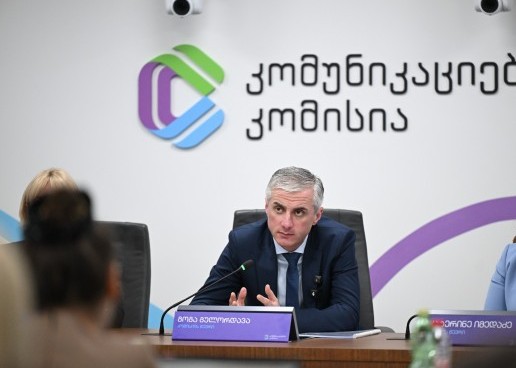
“As you know, in addition to disseminating information, the media carries a fundamental social function, which entails significant responsibility. Broadcasters have a substantial influence on viewers,” ComCom Chairman Goga Gulordava stated on the programme Imedi Live, where he reminded media representatives of their legal obligations and responsibilities toward viewers.
According to Goga Gulordava, the Communications Commission, as the independent regulatory authority in the broadcasting sector, is responsible for ensuring freedom of expression, media pluralism, and a stable media environment in Georgia. He also emphasised that media pluralism and freedom of speech are essential values for a democratic state, for viewers, and for the society as a whole.
“The legislative amendments introduced in April 2025 brought several issues under regulatory oversight, including due accuracy of facts and the right of reply, fairness and impartiality, as well as respect for human dignity and private life. However, we must emphasise that the Code of Conduct for Broadcasters, which was adopted in 2009, had already regulated these matters, meaning that the changes did not introduce fundamentally new standards. Responsible media outlets that follow high journalistic standards should have been guided by these principles in any case. Unfortunately, for years the Code of Conduct for Broadcasters was not properly implemented. Therefore, through a legislative decision, this content regulation was transferred directly into the scope of the law,” the ComCom Chairman stated.
Following the legislative amendments, the Communications Commission developed a guideline on content regulation, providing broadcasters with detailed information on the new regulatory framework. Media outlets were given the opportunity to adjust their editorial practices before the enforcement of the law began. Goga Gulordava also noted that after reviewing the first complaints submitted to the Commission, violations were confirmed, but the broadcasters involved were released from liability.
“After adopting the law, the Commission developed an important guideline on content regulation, which clearly explains what constitutes fairness, impartiality, and violations of honor and dignity, as well as how opinions should be distinguished from facts. It also clearly defines the issues the Commission will focus on and the criteria it will use when assessing potential violations. This document was sent to broadcasters in September 2025, yet somewhat surprisingly, no broadcaster submitted comments or remarks on it,” Mr. Gulordava stated.
The ComCom Chairman noted that one of his first meetings was with television broadcasters, during which he expressed the Commission’s readiness to cooperate with the media sector.
“We proposed that the media discuss all existing challenges with us, including regulatory matters – whether there were additional questions about how editorial policies should be developed, or how the law should be interpreted. However, we did not receive any specific outcomes from that meeting either. Despite the grace period granted – considering that the law has been in force for about a year – the Commission still remains in a complaint-response mode and has not yet moved to actively enforcing content regulation on its own initiative,” Goga Gulordava stated. According to him, since the law entered into force, the Commission has reviewed around ten complaints. In four cases, violations were confirmed, but the broadcasters were released from liability. In five cases, no violation was found. One complaint is still under review.